
AI’s Growing Energy Footprint and Why It Should Matter to You
Authored by Aditya Goushal | B2B Marketing Specialist III
AI is changing how I work every single day. As someone who works in marketing and analytics, I appreciate that an AI can assist me in writing content, analyzing trends, or help transform my disorganized ideas into a polished plan. It is quick and like magic. But there is a side of AI we do not see: every prompt I type runs on actual hardware in real data centers that use real electricity. And that energy footprint is rapidly expanding.
Data Centers Are Already Major Power Users
In the US, data centers already use around 4–5% of all the electricity in the country. Because of AI, that share could double or even triple over the next few years. The Stargate initiative, which aims to spend $500 billion—more than the Apollo space program—to build as many as 10 data centers (each of which could require five gigawatts, more than the total power demand from the state of New Hampshire). Apple announced plans to spend $500 billion on manufacturing and data centers in the US over the next four years. Google expects to spend $75 billion on AI infrastructure alone in 2025.
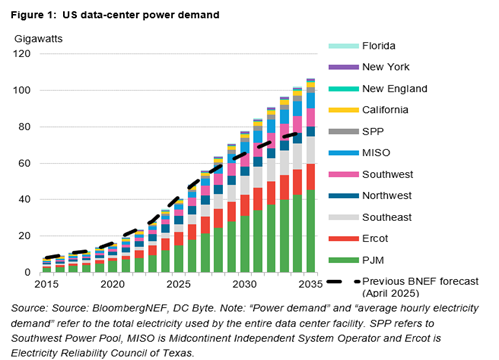
Why AI's Electricity Might Be Dirtier Than You Think
The issue is not only how much power is consumed, but also how it is generated. Many massive data centers are in areas that still mostly depend on fossil resources like coal and natural gas. One analysis found that the electricity going to data centers is about 48% more carbon‑intensive than the US average. That means that as AI grows, its share of climate pollution could grow even faster than its share of electricity use. The numbers seem tiny when you zoom in on a single inquiry. To put in perspective when you type a single query i.e., "how is the weather today?" the single response can take the same amount of energy as running a microwave for a fraction of a second. Larger and complicated queries can consume several seconds' worth of microwave time. For image or video generation, the energy use per request can be hundreds of times greater again.
On their own, the numbers do not sound scary until we think in scale and volume. AI tools already manage billions of messages every day across the world. The overall effect is enormous when you multiply "a few seconds of microwave time" by billions of prompts every day. Additionally, AI is everywhere in apps, office tools, digital platforms, email, and search at the same time.
The Future of AI Depends on Our Choices Today
It is not all bad, the good news is that there are actual ideas and proposals to make AI more efficient and climate‑friendly. Researchers and industry leaders are working on several fronts: designing smaller, more specialized models for simple tasks; building data centers alongside renewable energy and battery storage; and improving carbon accounting so companies must report their true footprint in a clear, comparable way.
AI is here to stay and will continue to aid our work in multiple fields. We have exciting potential to profit from AI without treating the electricity system like an endless battery if we strive for smarter models, greener data centers, and truthful reporting right away. It is all about the choice—how we build, consume, and regulate AI today—which will dictate what its energy footprint looks like in future.
Meet the Writer

Aditya Goushal
Freedom Energy Logistics
B2B Marketing Specialist III
Aditya Goushal is a Marketing Specialist at Freedom Energy Logistics with expertise in social media strategy, content creation, and data-driven marketing initiatives. Aditya combines his background in business administration and marketing analytics with a passion for innovative strategies to enhance brand visibility and engagement. Dedicated to advancing Freedom Energy’s mission, he leverages his skills to communicate impactful energy solutions and build strong connections across the industry.







Connect With Us