Commercial Electricity Costs Have Increased: Lets Understand and Think Strategy
Authored by Byron Blankenhorn | Renewable Program Director
Rising Commercial Electricity Rates Across the Eastern U.S.
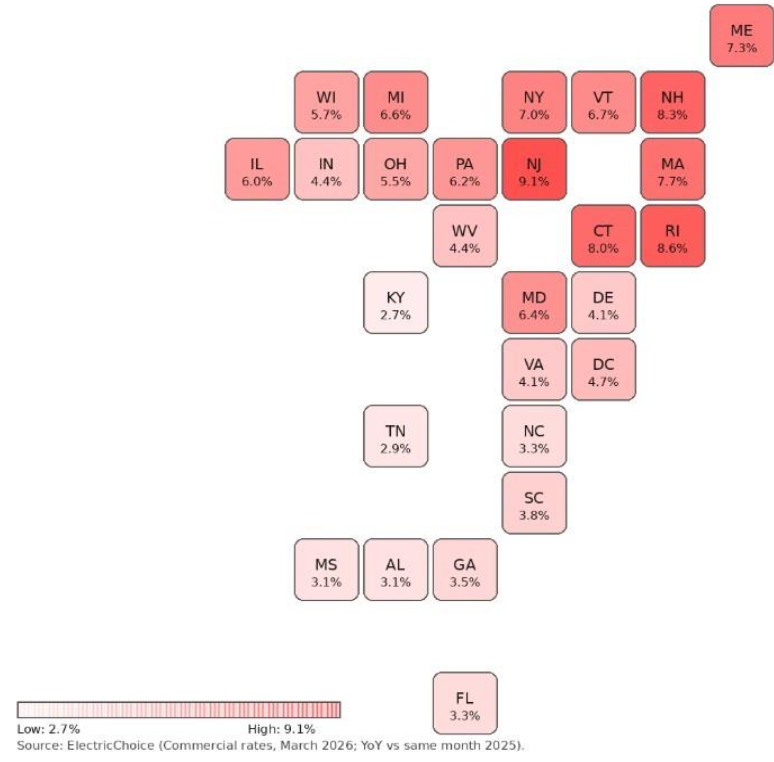
As we approach the end of the first quarter of 2026, the Freedom Energy Logistics team, and our commercial clients are observing that electricity rates are increasing year–over–year. A comparison of average commercial electricity rate increases in eastern United States shows that every state is experiencing increased electricity rates. Some of the eastern states with the highest year-over-year electricity rate increases are New Jersey (9.1%), Rhode Island (8.6%), New Hampshire (8.3%), and Maine (7.3%).
Electricity Costs vs Inflation: A Widening Gap
What is driving these energy rate increases across a broad range of geographies and utilities? A common default answer is that inflation (CPI) has been above average across the entire US economy since 2020. However, according to The Economist, the increases in US electricity costs are almost doubling those of the reported inflation in the US over the past four-year period (2022-2025).
US Commercial Electricity Rates vs Consumer Price Index (CPI)
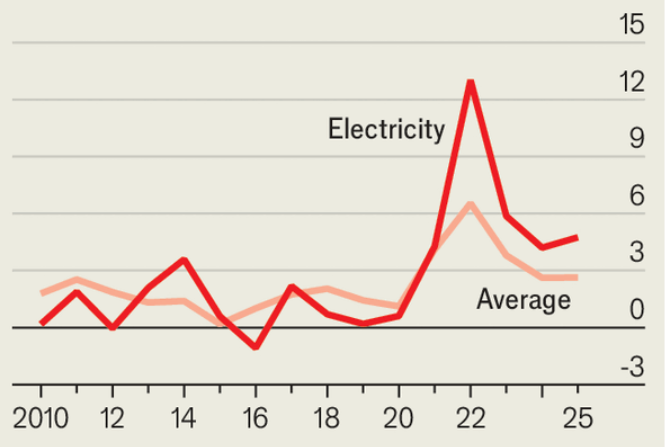
*Graph Source: The Economist March 2026
Beyond Data Centers: The Real Drivers of Cost Increases
Another common explanation for increased electricity rates is to blame the proliferation of data center development for the increased electricity costs in eastern US markets. While data center development is increasing the demand for electricity on constrained electricity grids, it is not the only explanation for cost increases. A study in 2025 by the Lawrence Berkeley National Laboratory (LBNL) showed that US data center load was not the main cause of the electricity rate rises in the five years from 2020 to 2025. The LBNL study data showed that US grid upgrades, rising costs of power-generating equipment, and rising costs in raw materials such as copper were also driving increased electricity costs. Wood Mackenzie estimates that last year demand for distribution transformers outpaced supply by 10%, and for power transformers the supply-demand gap was 30%. Manufacturers are reporting longer lead times for essential grid-related equipment to 120 weeks at the end of 2025, up from 50 weeks in 2021. These delays and increased costs are being passed onto the electricity consumers in the form of rates increases.
Strategic Response: What Organizations Should Do Now
How should organizations think strategically about the current environment of increased electricity costs? The current US electricity cost increases appear to be rooted in market fundamentals that aren't changing soon. Input costs for equipment are increasing, and data centers are projected to increase baseline electricity demand need between 50-70% in the next decade. The macro-economic data supports that electricity prices will trend upward in the coming years. This new reality of increased energy costs improves the economic benefits for organizations that upgrade their onsite energy generation, energy storage, and efficiency. Asset improvements that would have cost an organization money might now save them money when evaluated against current electricity price projections. Right now, early 2026, is a great time for organizations to understand and evaluate what options are available for reducing and optimizing electricity consumption from the electric grid.
References:
The Economist: Americans' electricity bills are up. Don't blame AI
Lawrence Berkley Energy Labs: Factors Influencing Recent Trends in Retail Electricity Prices in the United States
Meet the Writer

Byron Blankenhorn
Freedom Energy Logistics
Renewable Program Director
Byron Blankenhorn brings over 20 years of global sustainability and energy market expertise to his role as Renewable Program Director at Freedom Energy Logistics. He leads renewable program strategy and development across the company’s portfolio, helping clients navigate clean energy procurement and carbon reduction pathways.






Connect With Us