
The Energy Markets are screaming for more supply-so when will it get here?
Authored by Dileep Prabhakar | Regional Sales Manager
Electricity costs are running higher. Everywhere. Both supply (the cost to generate electricity) and distribution (the costs to build and maintain transmission lines) continue to rise sharply-well beyond inflation. So why is supply lacking demand?
Since the Covid rebound began in the spring of 2021, demand started rising and was initially thought to be a COVID rebound. The continued demand caught the nation's grid planners by surprise after a 15-year period of steady and even slightly decreasing demand nationally per the NERC chart.
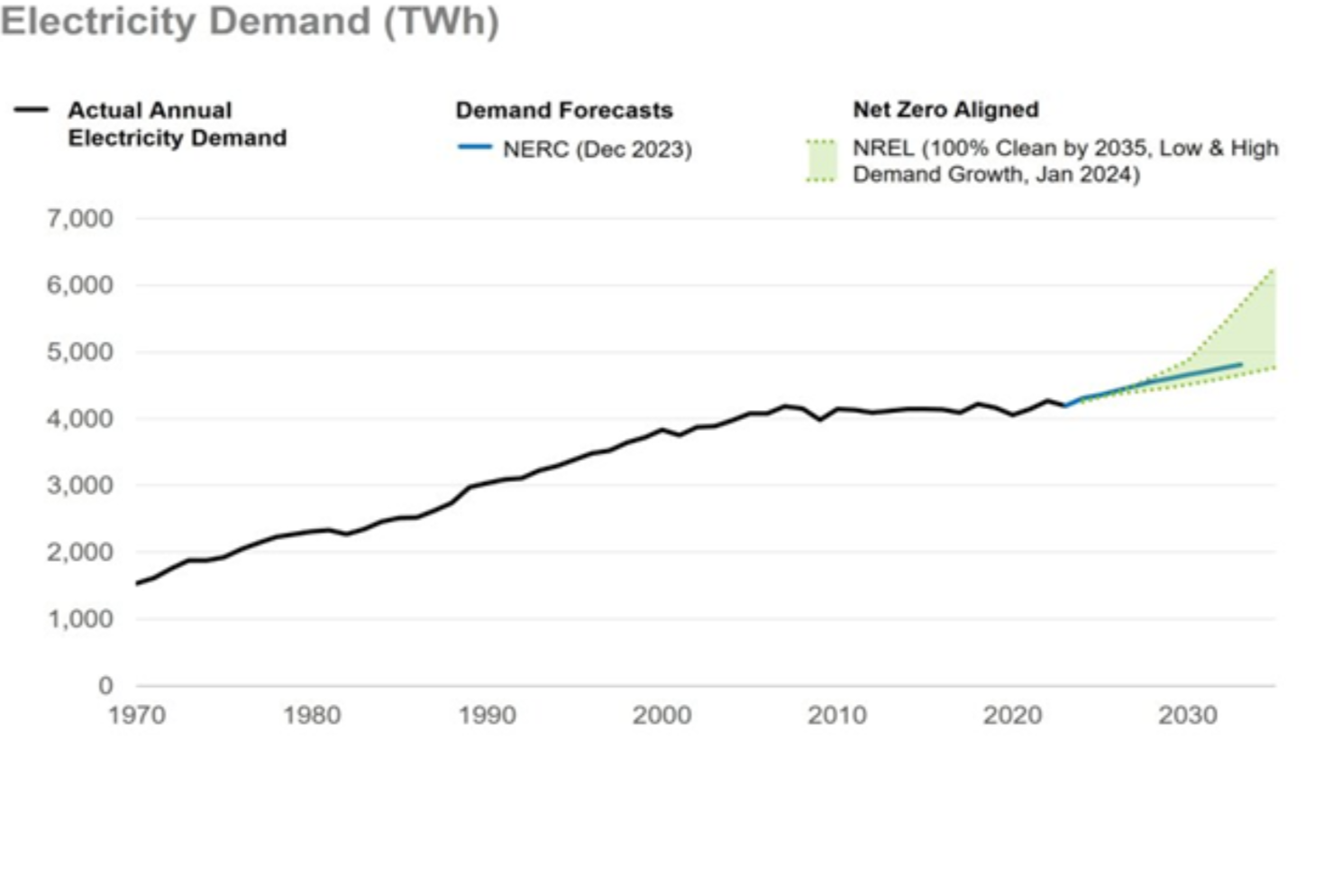
Though other factors contribute (electrification), new supply demand is primarily due to large Data Centers and the AI boom that requires a lot of computing power. Distribution costs are increasing due to an aging grid that needs upgrades, and new transmission lines desperately needed to transmit more electrons.
Distribution costs are regulated and socialized throughout a utility. Supply costs in regulated utilities operate the same way as distribution. In de-regulated utilities, independent merchant generators supply power and base decisions on when to add generation based on economics and not supply needs.
New Generation Needed-Regulated VS Deregulated utilities
While prices continue to rise, the mechanisms in regulated verses deregulated utilities differ in how and when new generation is added to the mix. The primary difference is who is footing the bill for construction and land acquisition costs.
In regulated utilities, the utility will go through a board to get approval for new generation based on demand forecasts and possibly when reserve margins are low. The utility will acquire the land, and construct said power plants. Those costs will then be socialized through all the captive rate payers within the utilities' territory. In regulated markets, the utility is protected and guaranteed cost recovery and profit.
In deregulated utilities, it is more about the economic signals versus the need. Utilities that are deregulated are just responsible for distribution, and for-profit Merchant plants compete to supply generation.
Merchant plant companies evaluate the market and decide when to go through the rigorous process to build plants. Those companies are making business decisions for capital investment and taking risks, and in most cases, there is no guaranteed return on investment. This method protects the ratepayers, but it does create more caution in adding new generations. If future power prices drop, for example, the merchant plant will take the financial hit, and conversely the reward if prices continue to increase.
The timing to add generation-and the role of Independent System Operators
Rising prices do not receive immediate relief when it comes to electricity compared to other markets and products. Reserve Margins in an ISO a couple of decades ago used to be 20%. They have been and continue to shrink for economic reasons. Reserve Margins and Prices will have to remain stressed for an extended period before the lengthy process of adding generation begins. That process takes several years to bring the new generation to the grid and bring relief. For example, a new natural gas plant can take 5 years to build. Solar has a shorter range of about 3 years while wind can be in the 7–10-year range. The larger the plant, the longer it takes to acquire the land and build.
The Role of the Independent System Operator (ISO)
Independent system operators link several utilities over multiple states together keeping grids up and running. In most ISO's, you will have both regulated and deregulated utilities for supply.
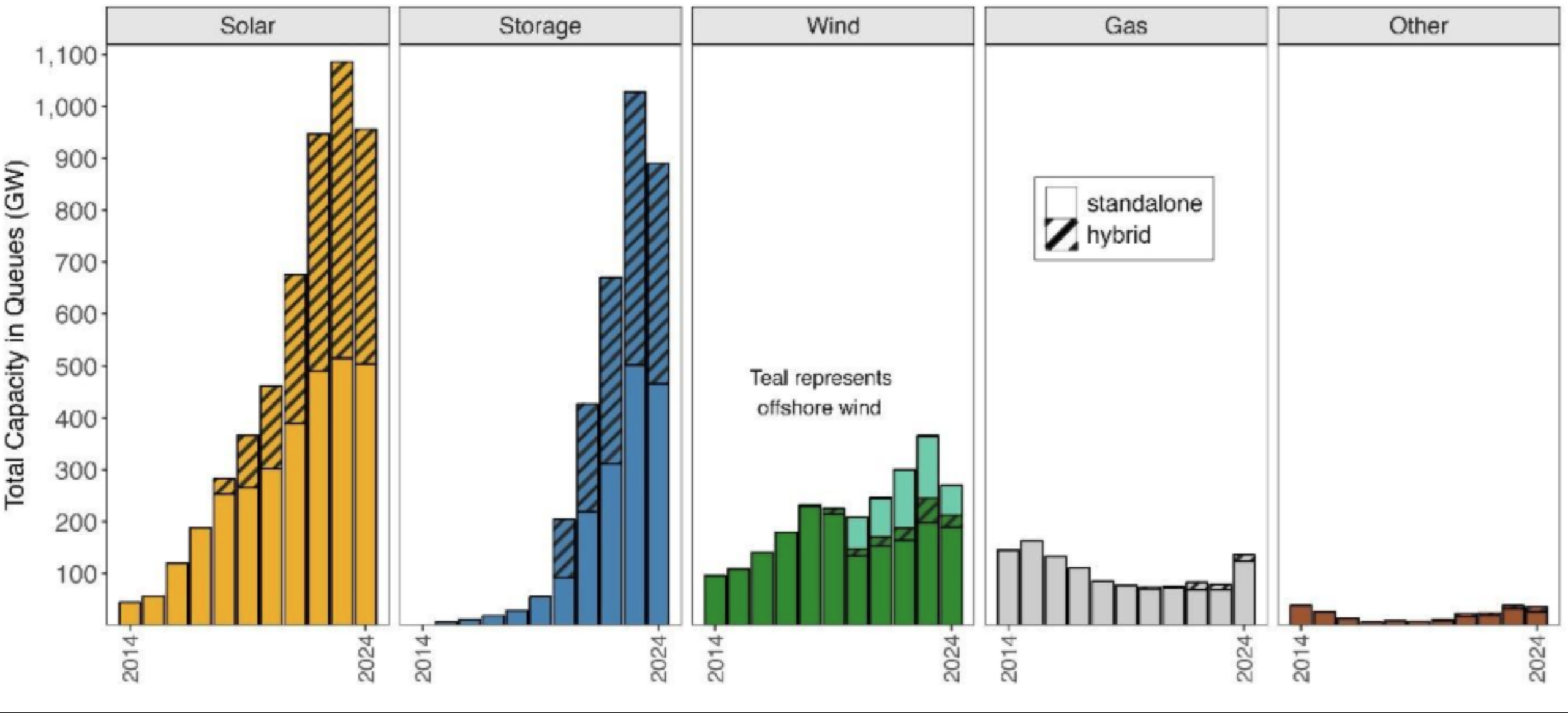
ISO's work with utilities to maintain grid integrity (keeping the lights on) and interconnecting new sources without tripping the grid. It is a delicate balance, and the requests for more grid interconnections have led to backlogs of up to 5 years in queue. The queue continues to grow year over year.
Per the Energy Markets & Planning file below New solar and battery storage projects are the main sources backlogged as these are the main sources being built. FERC order 2023 was designed to speed this process up, but backlogs and waiting times continue to grow.
What Needs to Happen Next?
Utilities are still conducting interconnection requests like its 1999. That speed doesn't work today with the backlog. Utilities are going to need to automate and perhaps use more AI for the process to speed up these queues and bring waiting generation and batteries online.
As for the sources, we need all sources of new generation, and if the AI boom continues, we will need to invest heavily in small modular nuclear reactors, which can generate a lot of power, without taking up a lot of space. In the coming years though, demand will continue to outstrip supply, and prices will remain bullish.
Meet the Writer

Dileep Prabhakar
Freedom Energy Logistics
Regional Sales Director
Dileep Prabhakar, a Regional Sales Director at Freedom Energy since 2022, brings over 30 years of engineering and energy experience to his role. He has advocated for municipalities, school districts, and commercial and industrial customers, managing their energy procurement and sustainability initiatives while optimizing their energy spending and achieving decarbonization goals.






Connect With Us