
Annual System Peak Programs
Authored by Howard Plante | Vice President of Procurement
Annual System Peak Programs
As we head into the summer season it also means we will be sending out Peak alert notices to help guide customers that can curtail use with the intent of reducing capacity costs and impacting grid reliability. Last year the Peak in New England hit near the beginning of summer on June 24th. Each year we strive to minimize the number of notices that we send, and last year we were fortunate to only require a single notice for the ISO-NE region.
New for 2026: PJM Coincident Peak Alert Program
For the past 17 years we have provided Annual System Peak notifications for the ISO-NE Control Area. This year we are launching a PJM Coincident Peak (CP) Alert Program to help customers in the 13-state region to proactively manage demand during periods when regional grid usage is at its highest. This initiative is designed to provide added support with our continued expansion into the PJM region and give our customers better visibility into potential peak events.
What is a PJM Coincident Peak?
PJM Interconnection (PJM) manages the electric grid across much of the Mid-Atlantic and Midwest regions in 13 states. Each year, customers are assigned capacity costs based on their electricity usage during the five highest demand hours (5-Coincident Peaks) across the entire PJM system. Your Peak Load Contribution (PLC) is assessed based on your average demand during the 5-Coincident Peaks.
Because these peaks occur unpredictably, typically on the hottest summer and high humid days, reducing load during just a few hours can significantly lower future energy costs.
*The 5-coincident peaks can only be established from June 1 through September 30 on non-holiday weekdays only.
The Benefits of Reducing Load During the Peaks
Capacity charges tied to Coincident Peaks can make up a substantial portion of total electricity spend. Even modest reductions in usage during these critical hours can generate meaningful savings for the following year.
In addition to cost management, reducing demand during peak periods supports overall grid stability and reliability, and helps prevent stress on the regional power system during extreme weather conditions.
What You Can Expect
During the summer months (June–September), participants may receive alerts indicating:
- Real-Time Alerts: Notifications will be issued ahead of likely peak days based on weather forecasts, load modeling, and market intelligence.
- "Watch" Days: Conditions are trending toward a potential peak—prepare to reduce load.
- "Alert" Days: High probability of a peak event—load reduction actions are strongly encouraged.
Alerts will typically be sent the day before and/or the morning of a potential peak.
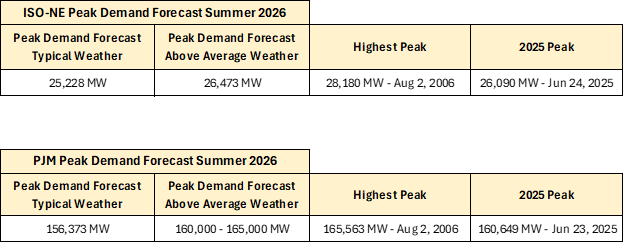
Some Statistics for the Two Regions
Looking Ahead
Our goal is to make participation as seamless and impactful as possible. If you have questions about the program and would like to receive notices, please contact your Freedom Energy Logistics energy advisor.
Meet the Writer

Howard Plante
Freedom Energy Logistics
Vice President of Procurement
Howard Plante is a seasoned professional in the energy industry with a comprehensive background in environmental and energy engineering. As Vice President of Procurement at Freedom Energy Logistics, he brings a wealth of experience in regulatory compliance, technical analysis, and strategic planning to his role, where he is dedicated to advocating for clients and advancing the company’s enterprise efforts on their behalf.







Connect With Us