
Market Update
PJM Coincident Peak Alert Program
June 1st Through July 31st, 2026
During the first two months of the 4-month PJM Coincident Peak period which runs from June 1 through September 30, we sent notifications identifying nine days that could potentially result in a 5-coincident peak. The first potential peak date identified was June 11, and the last was July 16.
Notable Statistics Regarding the Nine Peak Alert Notification Days
- All nine days exceeded the lowest peak in the past 10 years
- Two days exceeded the highest peak in the past 10 years
- Three days exceeded PJM’s Summer 2026 Peak Forecast
- July 2 is currently the highest peak to date through July 31
- July 1 and 2 peaks exceeded the highest peak in the past 10 years
The chart below depicts the forecast and actual results of the nine alert days through July 31, 2026.
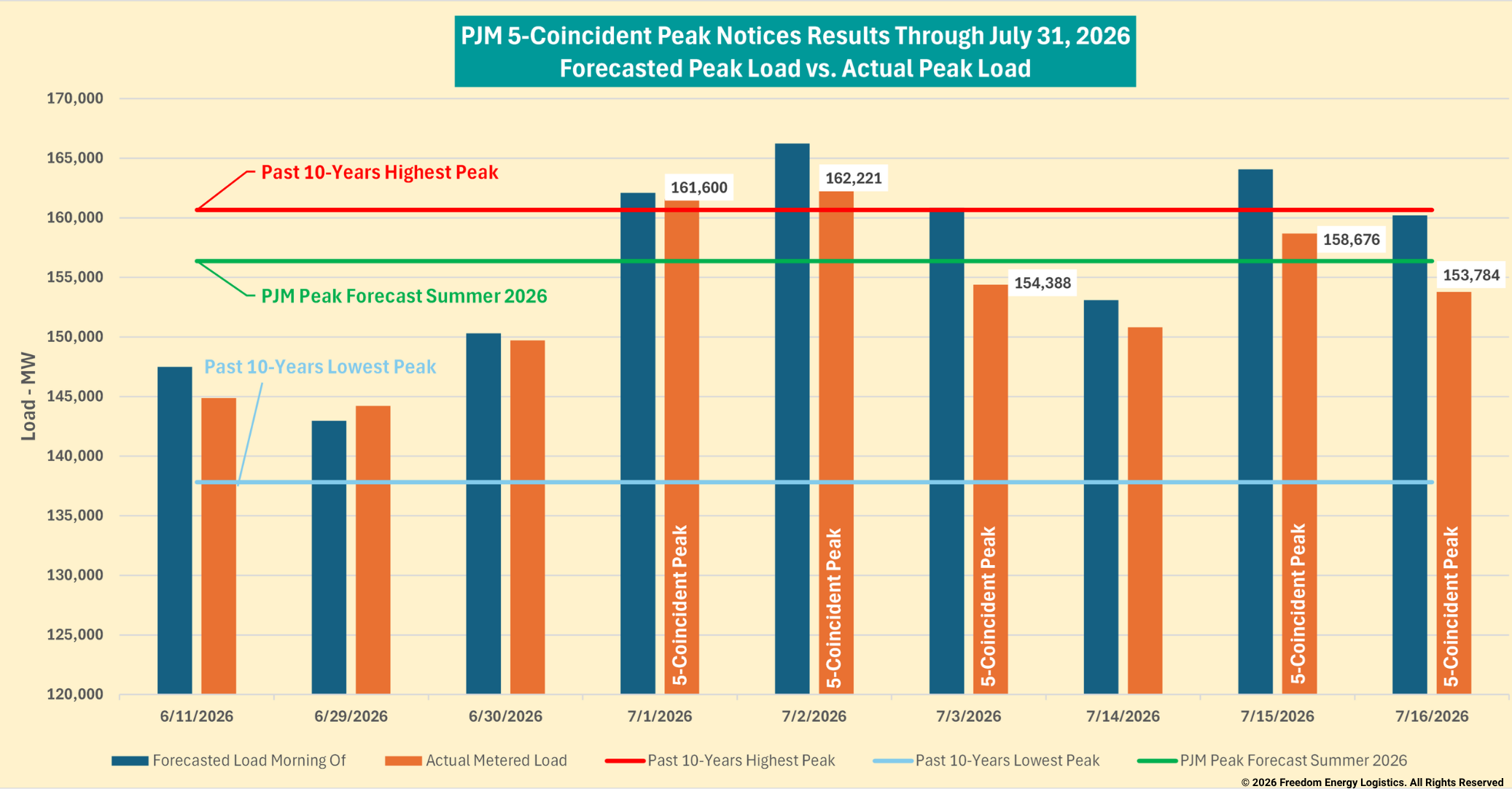
The goal is to identify the 5-coincident peaks with minimal notices and capture not only the highest, but the 4 peaks below the high. Although some of the earlier peaks were subsequently replaced by higher peaks, historical data necessitates sending alerts on those days.
Expectations for the Remaining Two Months of the Peak Alerts
The 5-coincident peaks can only be established from June 1 through September 30 on non-holiday weekdays only. Historically during the past 10 years representing 50 coincident peaks (5 each year), half have occurred in July.
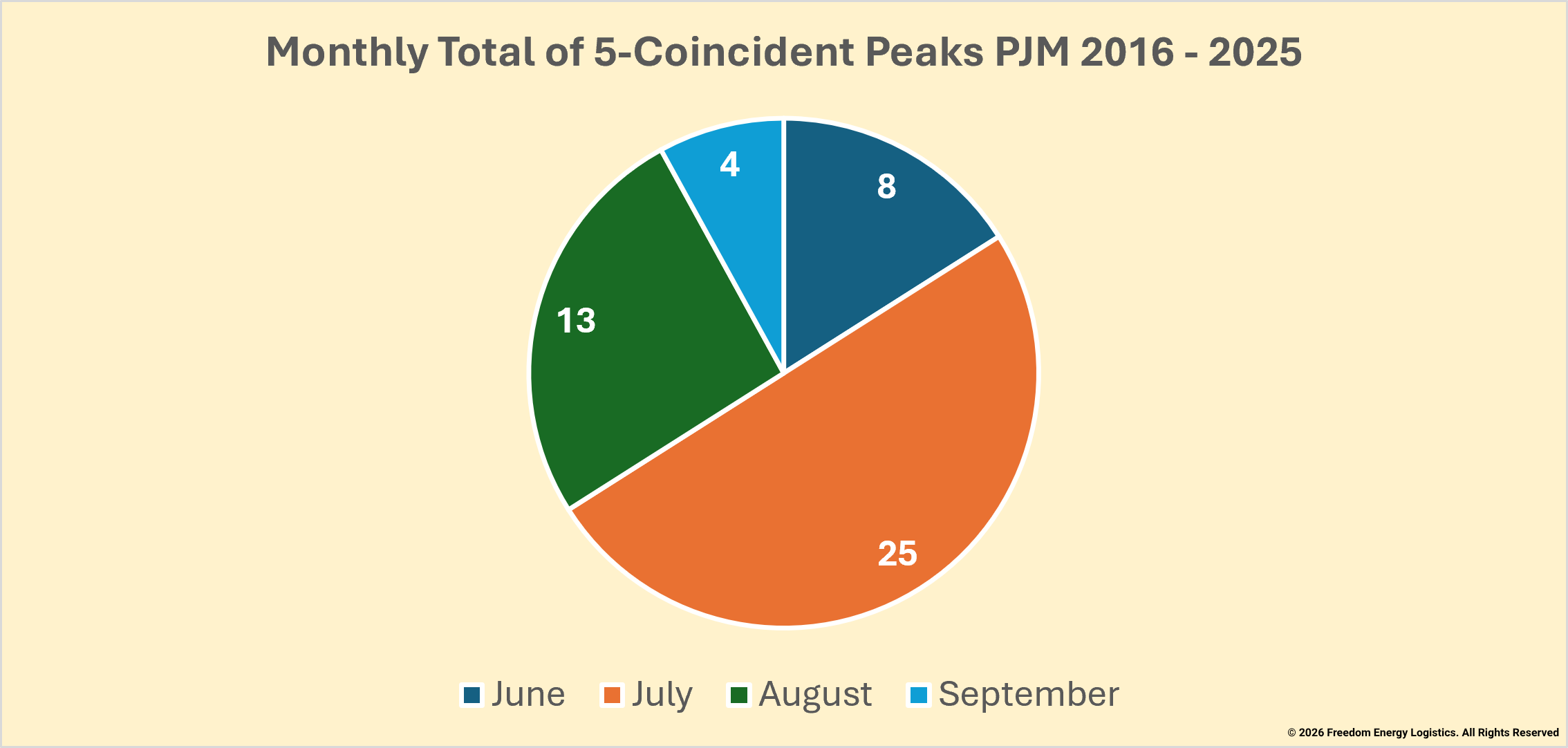
There are two months left and based on the numbers; it stands to reason that the number of potential days will diminish. However, things are changing. The peak that once occurred at the 4 pm or 5 pm hour, is gradually shifting to later in the day because of increasing behind-the-meter solar generation. Solar output suppresses load during the middle of the day and falls off rapidly after 5 PM. Cooling load remains high causing grid load to shift towards 6 pm to 8 pm.
Additionally, increased solar generation could gradually migrate the peaks to occur more often in August and September.
Results presented to date are based on available metered load data and preliminary analyses. Final outcomes may change when PJM completes its official review and publishes the final five Coincident Peak (5CP) hours for the planned year. Any comparisons, rankings, or estimated peak-day impacts should therefore be considered preliminary until PJM’s final peak determinations are released
Meet the Writer

Howard Plante
Freedom Energy Logistics
Vice President of Procurement
Howard Plante is a seasoned professional in the energy industry with a comprehensive background in environmental and energy engineering. As Vice President of Procurement at Freedom Energy Logistics, he brings a wealth of experience in regulatory compliance, technical analysis, and strategic planning to his role, where he is dedicated to advocating for clients and advancing the company’s enterprise efforts on their behalf. Click here to read Howard’s full bio.









Connect With Us