
New England Spot Market and Futures Electricity and Natural Gas Price Summary
Authored by Howard Plante | Vice President of Procurement
New England Spot Market and Futures Electricity and Natural Gas Price Summary
Coming off of a very cold winter, spot market electricity prices relaxed as expected, but not as low as 9 of the past 10 years. Prices moderated from the winter highs, but the day-to-day volatility persisted in March. Real-time prices reached 17.0 cents per kWh on March 2 due to binding constraints (a physical power grid limitation which forces ISO-NE to use more expensive local power plants instead of less expensive but more distant plants). On March 19 prices were close to 20.0 cents per kWh when actual load exceeded forecasts. To keep things interesting, there were 35 hours of negative prices. In contrast, there were two negative priced hours in April and 14 in May.
Natural gas spot prices fell as heating demand dropped, but the spring also experienced day-to-day volatility due to frequent temperature swings, a few late season cold snaps and some early heat events in May that required increased power demand.
We finally saw Day-Ahead Ancillary Services Initiative (DASI) prices moderate, averaging 0.23 cents per kWh March-May with the last week of May at a very slight credit.
Spot Market Wholesale Electricity Prices
For the three-month period March–May 2026 real-time wholesale electricity prices averaged 4.8 cents per kWh, 0.8 per kWh higher than last spring and the second highest spring in 10 years (2022). Through June 7 prices are slightly below June 2025, well below the 10-year June high in 2022.
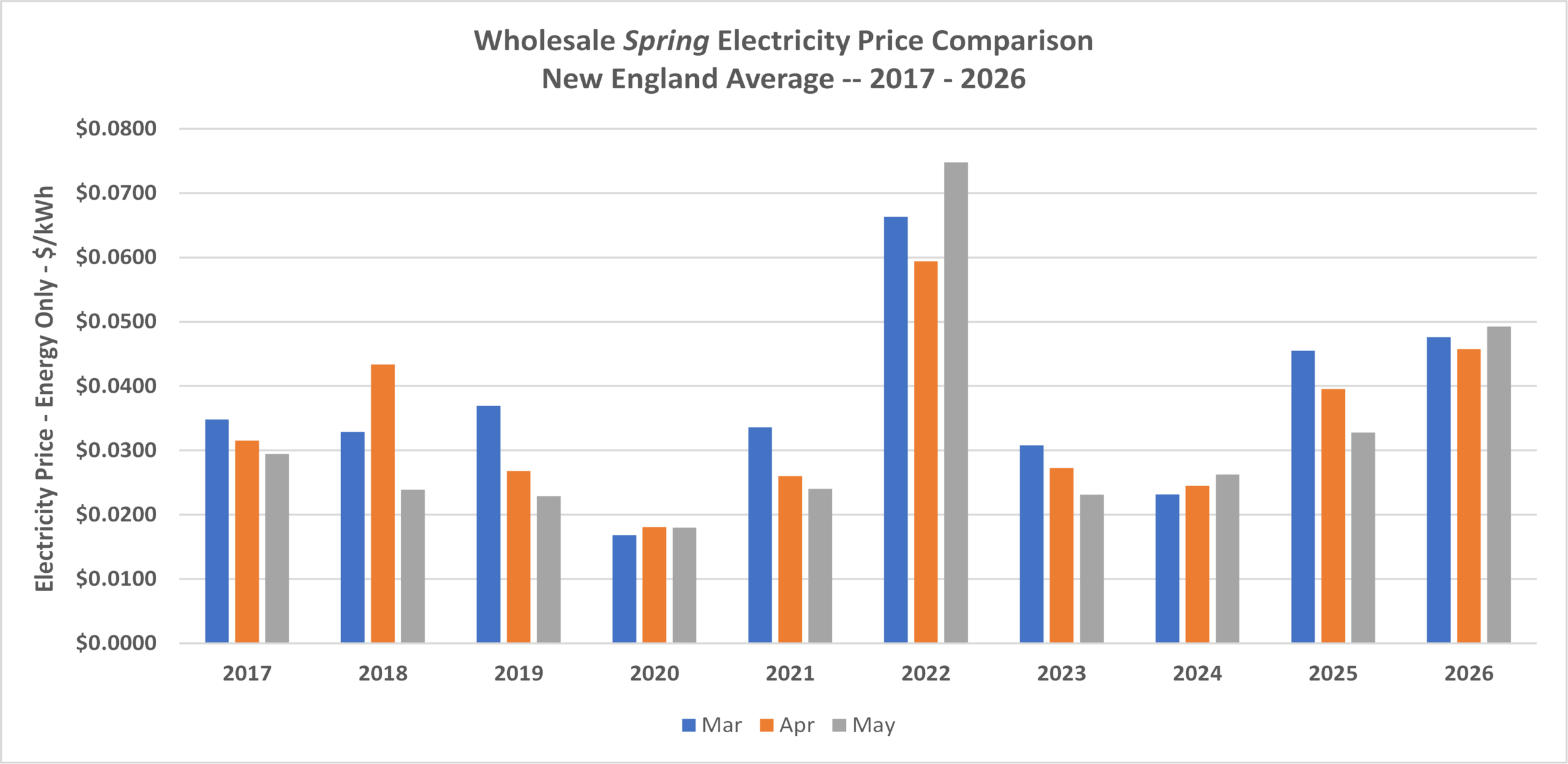
Table 1 Depicts average monthly wholesale electricity prices for the three-month period March–May for the past 10 years. (2017 through 2026)
Future Energy Price Trends Across 2027, 2028 and 2029
Futures electricity prices for 2027 fell three consecutive weeks after hitting 7.9 cents per kWh at the end of March as natural gas prices sold off from low demand and a strong storage outlook. This was followed by prices snapping back up when natural gas markets as a result of forward demand expectations and a shift in the storage outlook. Additionally, oil prices have been volatile due to the Iran war, causing winter electricity prices for Jan and Feb to jump on risks of oil generation requirements if we have another cold winter (oil was the marginal fuel for several days this past winter). Consequently, the 2026 electricity futures spiked to just over 8.0 cents per kWh in mid-May.
Futures prices for calendar year 2027, 2028 and 2029 have been trending upward since mid-May 2025. If the Iran war persists, we’ll likely continue to see weekly volatility in the futures market, particularly for 2028 and 2029 are trading considerably lower than 2027.
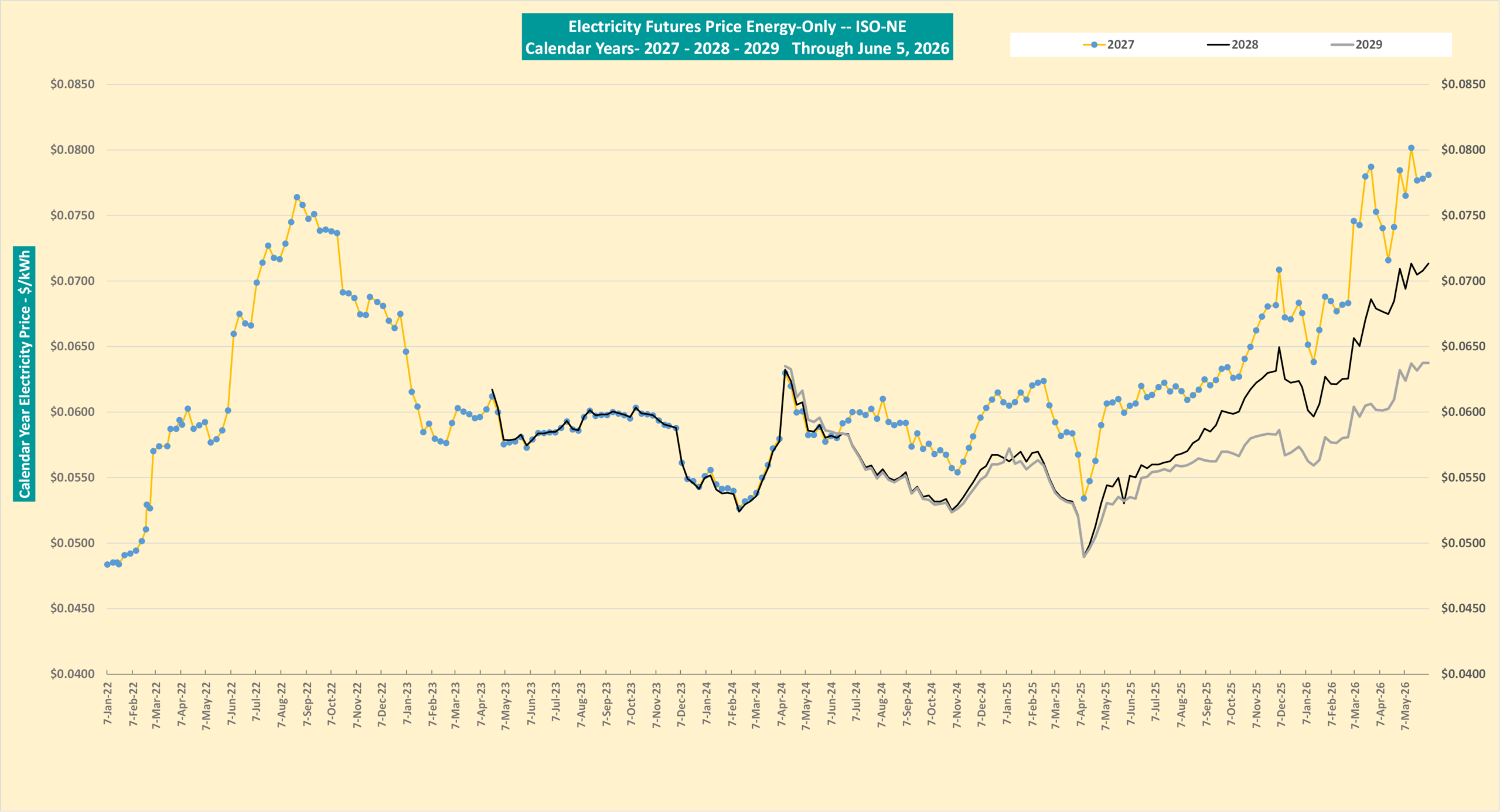
Table 2 Depicts electricity futures prices for calendar years 2027, 2028 and 2029 as of June 5.
Natural Gas
Natural gas futures prices for 2027 dropped 8 out of 9 weeks beginning March 27 before rebounding at the very end of May.
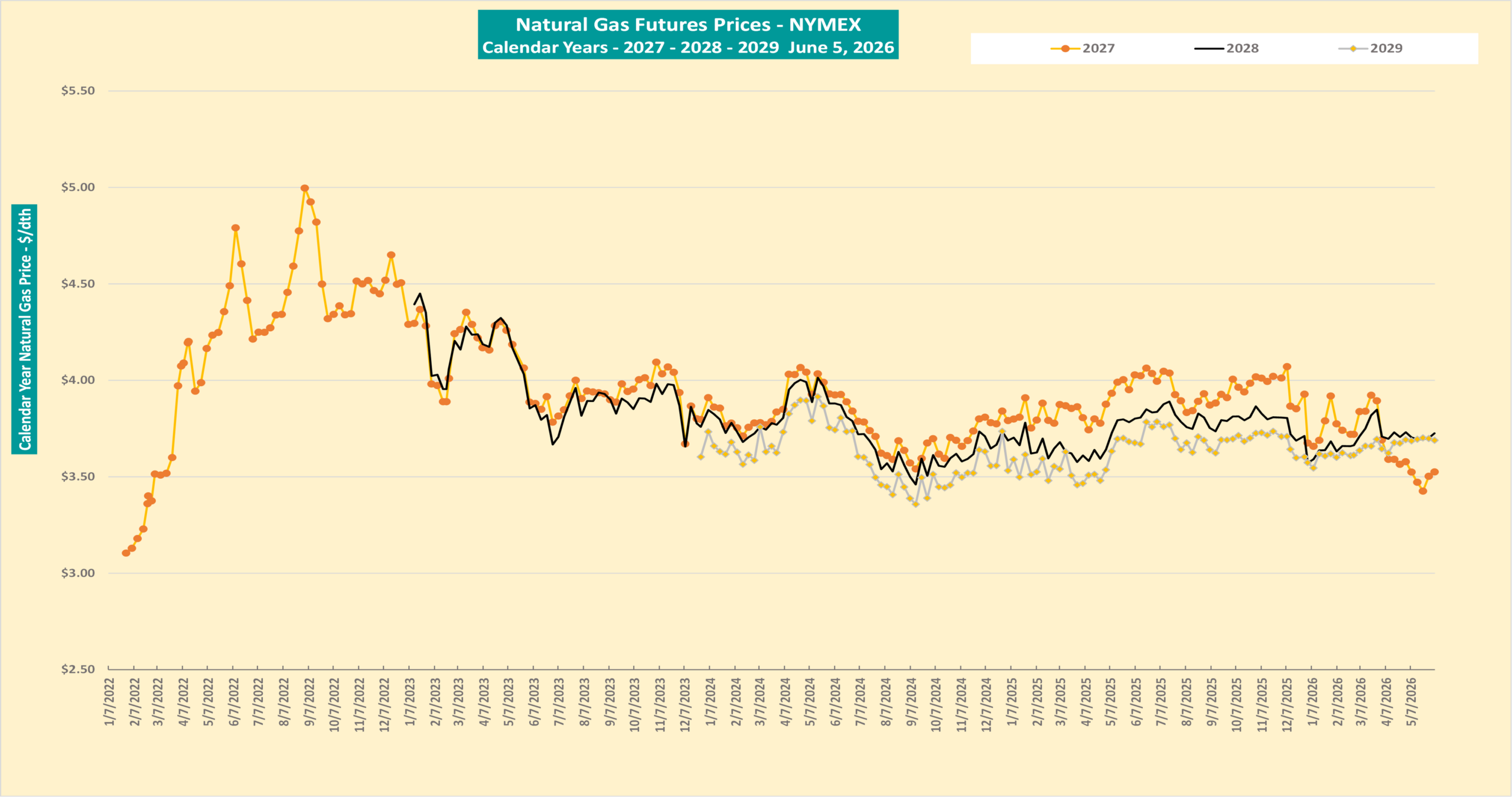
Table 3 Depicts natural gas futures prices for calendar years 2027, 2028 and 2029 as of June 5.
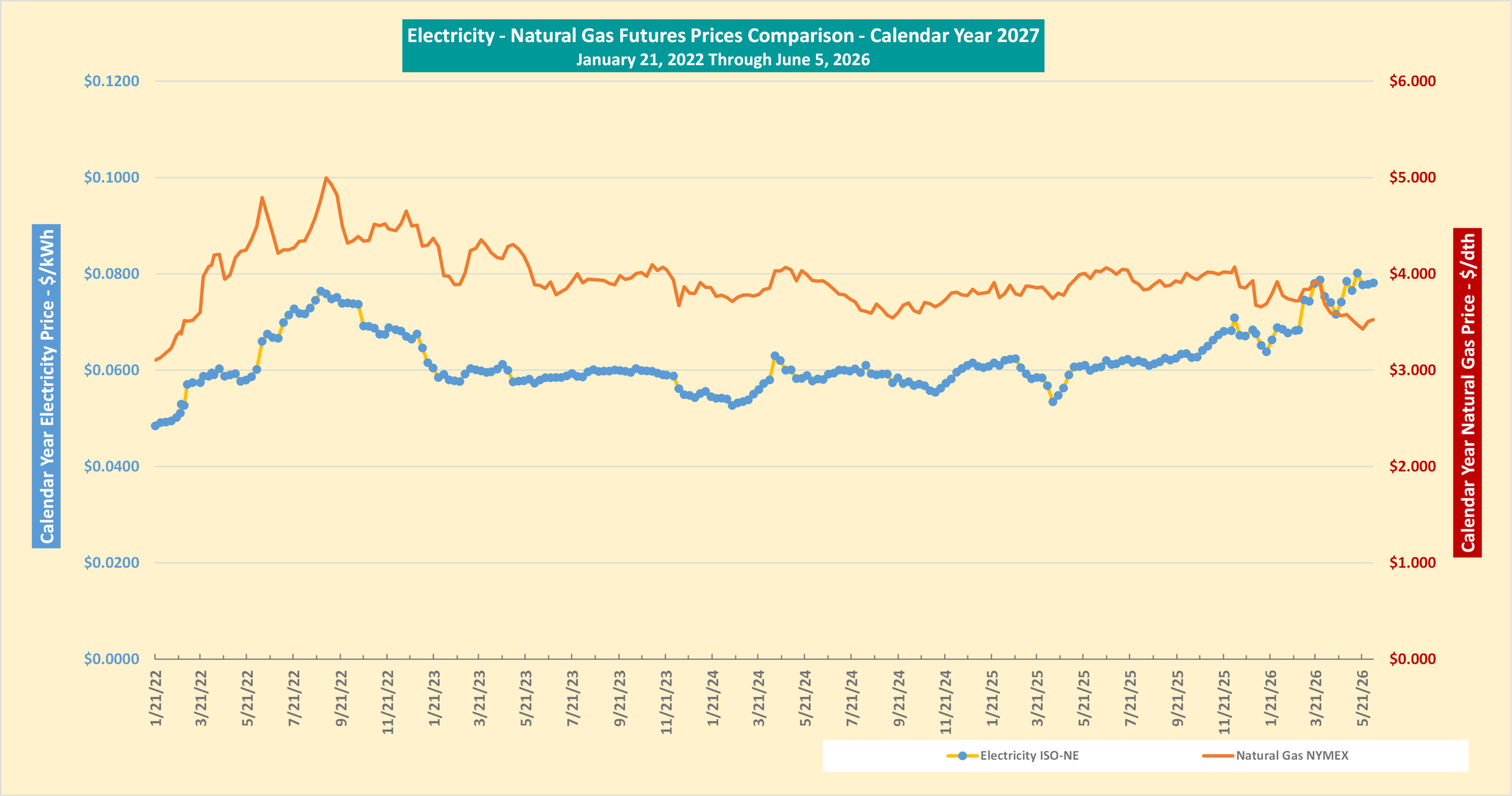
Although electricity prices in New England typically track natural gas prices, Table 4 depicts the continued divergence between the two for the 2027 futures.
Natural Gas Storage
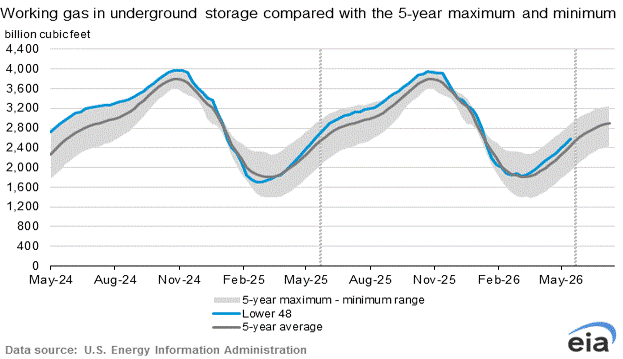
Withdrawals of natural gas from storage continued as expected into the first week of March, with the first injection occurring week-ending March 13. After a withdrawal in the third week of March, injections started out above expectations in April and a bit below in late May but still above the 5-year average.
Note: Electricity prices referenced here are energy-only and do not reflect a total electricity supply price that includes capacity, ancillaries, RECs, Fuel Security, etc. Additionally, natural gas prices referenced are NYMEX only and do not include basis and capacity costs.
Meet the Writer

Howard Plante
Freedom Energy Logistics
Vice President of Procurement
Howard Plante is a seasoned professional in the energy industry with a comprehensive background in environmental and energy engineering. As Vice President of Procurement at Freedom Energy Logistics, he brings a wealth of experience in regulatory compliance, technical analysis, and strategic planning to his role, where he is dedicated to advocating for clients and advancing the company’s enterprise efforts on their behalf.







Connect With Us