
Annual System Peak Summary ISO-NE – 2026
Authored by Howard Plante | Vice President of Procurement
With the summer cooling season winding down, July 2nd is increasingly likely to stand as ISO-NE's peak demand day for 2026. The July 2nd peak occurred during a stretch of hot and humid weather across the Northeast. Overall, the summer was relatively manageable from a demand perspective, with only two curtailment notices issued during the season, July 2nd and 3rd. Based on current information from ISO-NE, July 2nd peaked at 25,303 MW at hour ending 7 PM.
Although July 3rd's projection of 24,300 MW was below July 2nd, previous year's reconciled data by ISO-NE and the potential for demand to exceed the forecast as the second/third day of a heat wave, warranted a curtailment notice. By 3:00 PM demand started trending above the projection and remained well above, however it ultimately peaked at 24,358 MW at 7 PM.
By late September, New England has moved beyond the time of the year in which the combination of high temperatures, humidity, strong air-conditioning load, and normal weekday activity is most likely to produce a new summer peak. The latest peak, and the only one to occur beyond August was on September 7, 2023.
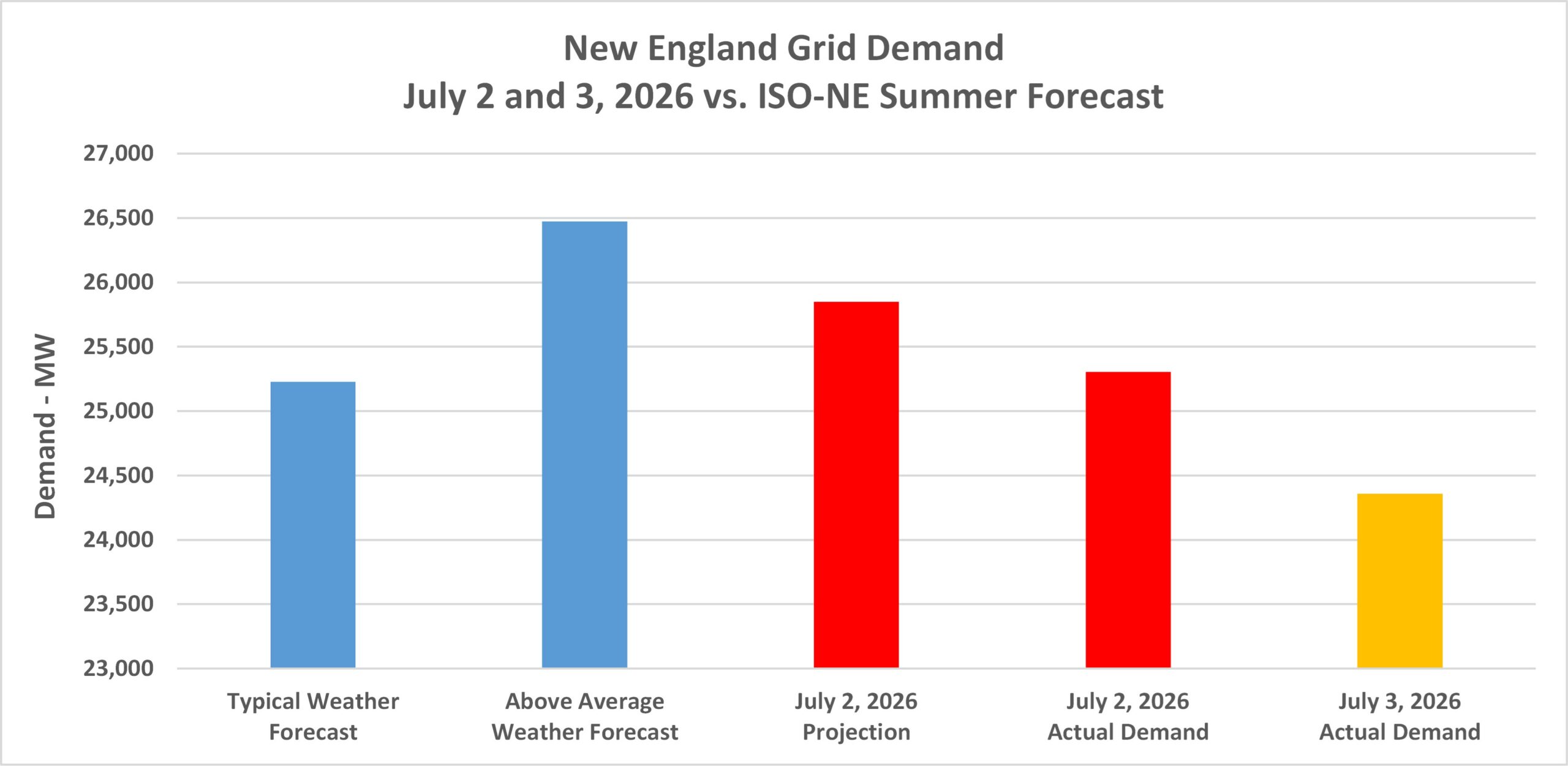
On July 2nd temperature’s reached 95 °F to 100 °F in much of New England, breaking records in many locations. Demand exceeded ISO-NE’s summer forecast for typical weather but did not exceed the day’s projection of 25,850 MW or the above average weather projection. Behind-the-Meter solar generation was estimated to be contributing approximately 6,500 MW at 12:40 pm. In comparison, the estimated B-T-M solar on the peak day last year was approximately 6,000 MW.
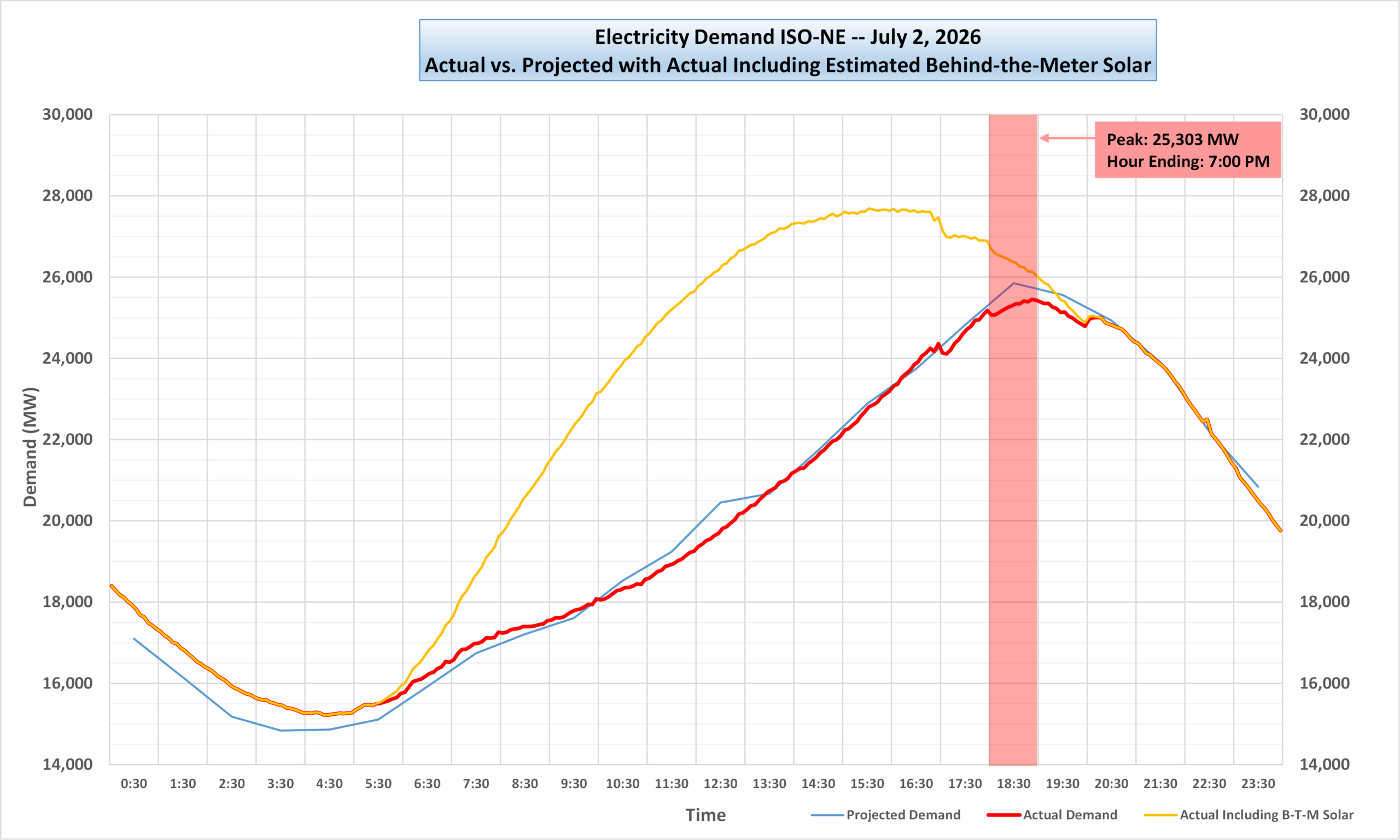
Exceeding July 2 at this point would require an increasingly unusual set of circumstances. A late-season warm spell could certainly increase demand, but reproducing the extreme heat and humidity that affected New England during the early-July event becomes progressively less likely as the region moves further into fall. July 2nd should now be viewed as the likely ISO-NE peak demand day for the 2026 summer season, and very likely for calendar year 2026.
The combination of an exceptional regional heat wave, very high cooling requirements, and the fact that we are now well past the traditional summer peak-demand window makes a higher demand day increasingly improbable. While a new calendar-year peak cannot be ruled out entirely, particularly as New England’s longer-term electrification trends increase the importance of winter load, the probability of surpassing the July 2 level during the remainder of 2026 appears low. ISO-NE’s longer-term forecast itself indicates the growing importance of winter demand as heating electrification progresses, although its normal-weather summer and winter peaks are not expected to converge until the mid-2030s.
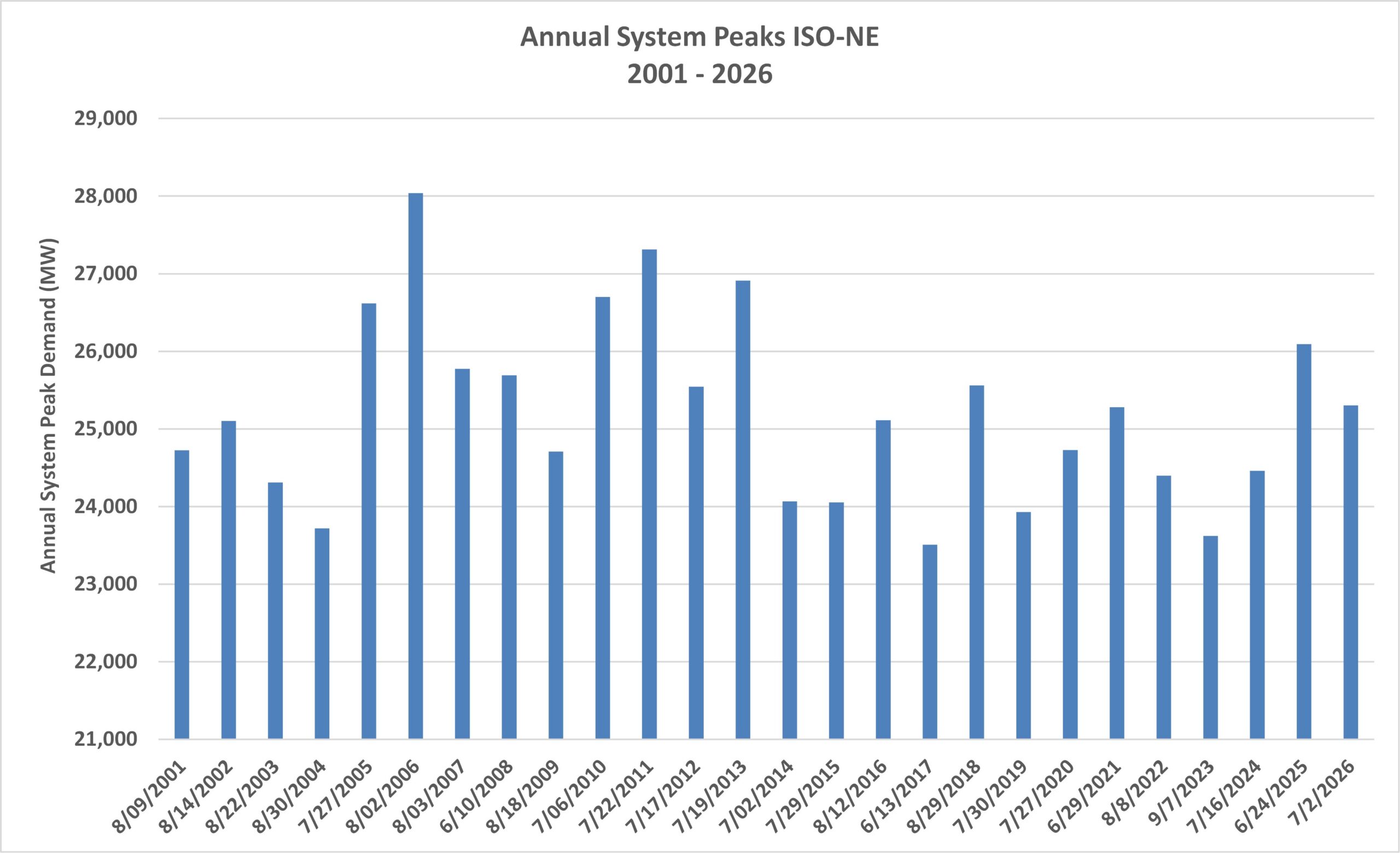
2026 Peak Ranking
If July 2 holds, it will rank as the 11th highest peak since 2001.
Annual System Peak Voluntary Curtailment Program
The annual system peak is the single hour in the calendar year when electricity demand throughout New England is highest. That hour is most likely to occur during the summer on the hottest and most humid weekday in late afternoon (see above for future changes). Each year we send curtailment notices during the summer to customers when we think the peak may occur, recommending curtailment between 4-7 pm.
The peak hour establishes each electricity account’s capacity tag based on its load during that hour, and becomes effective the following year beginning June 1 for a 12-month period. The annual system peak is essentially the sum of the capacity tags for all accounts combined. ISO-NE bases its planning for electricity generation to ensure adequate supply during that peak demand hour. The cost of capacity is established through the Forward Capacity Market auction process.
Every account’s electricity supply cost includes a charge for capacity based on its capacity tag. By curtailing during that peak hour, an account can reduce its capacity tag, and thus the associated cost going forward (depending on the timing and term of their retail supply contract). Additionally, curtailment during that peak hour helps ISO-NE to reduce the need for new future generation.
Meet the Writer

Howard Plante
Freedom Energy Logistics
Vice President of Procurement
Howard Plante is a seasoned professional in the energy industry with a comprehensive background in environmental and energy engineering. As Vice President of Procurement at Freedom Energy Logistics, he brings a wealth of experience in regulatory compliance, technical analysis, and strategic planning to his role, where he is dedicated to advocating for clients and advancing the company’s enterprise efforts on their behalf.






Connect With Us